English
 عربى
 русский
 简体中文





2026-10-21
الصفحة الرئيسية / أخبار / أخبار الصناعة / Take-Up Winder Guide: Selection, Care, and Upgrade Paths for Filament Spinning Lines
A take-up winder sits at the end of a filament spinning line, yet its influence reaches all the way back to the spinneret. It is tempting to treat the winder as a simple collector, but in daily production it is the place where spinning quality becomes a shippable package. Winding tension, package build, transfer reliability, and protection from damage all meet here.
From our work with spinning lines and winding equipment, we have seen how often a small winding problem is mistaken for a spinning problem. The reverse is also true. Understanding what the take-up winder actually controls helps teams ask better questions, choose the right equipment, and keep existing lines productive.
At its simplest, a take-up winder pulls filament yarn at a controlled speed, lays it onto a package with a traverse or guide system, and builds a stable roll that can be handled, stored, and unwound downstream. In filament spinning, the winder also manages contact pressure, package density, transfer timing, and doffing. These functions must remain consistent from the first meter of a package to the last.
The winder does not work alone. It interacts with godets, finish application, interlacing, and the cooling and spinning conditions upstream. If the yarn arrives with inconsistent tension or finish, the winder will show the result as package vibration, bulging edges, broken filaments, or transfer breaks. A good winding investigation therefore looks at the winder first, but not at the winder only.
This is why take-up winders are specified by yarn type and process purpose, not by speed alone. A POY line, an FDY line, a HOY line, and an industrial yarn line place different demands on package build, tension control, and transfer reliability.
Most winding faults can be traced to a small number of mechanical and control points. The table below is a practical starting point for operators, maintenance teams, and production engineers.
| Assembly | Primary role | Typical symptom to investigate |
|---|---|---|
| Chuck or spindle | Holds the tube and rotates the package | Runout, vibration, bearing noise, poor package release |
| Contact or bailer roll | Controls surface contact and package density | Bouncing, marking, inconsistent package hardness |
| Yarn guide plate and rod | Positions the yarn before winding | Groove wear, fuzz, broken filaments, damaged yarn path |
| Tension block | Stabilizes tension during winding and transfer | Drifting tension, package bulge, transfer breaks |
| Shift fork and gearbox | Moves the yarn to a new package during transfer or doff | Missed transfer, damaged package edge, noisy movement |
| Traverse and interlacing components | Lay the yarn and add cohesion where required | Ribboning, loose nodes, poor package shape |
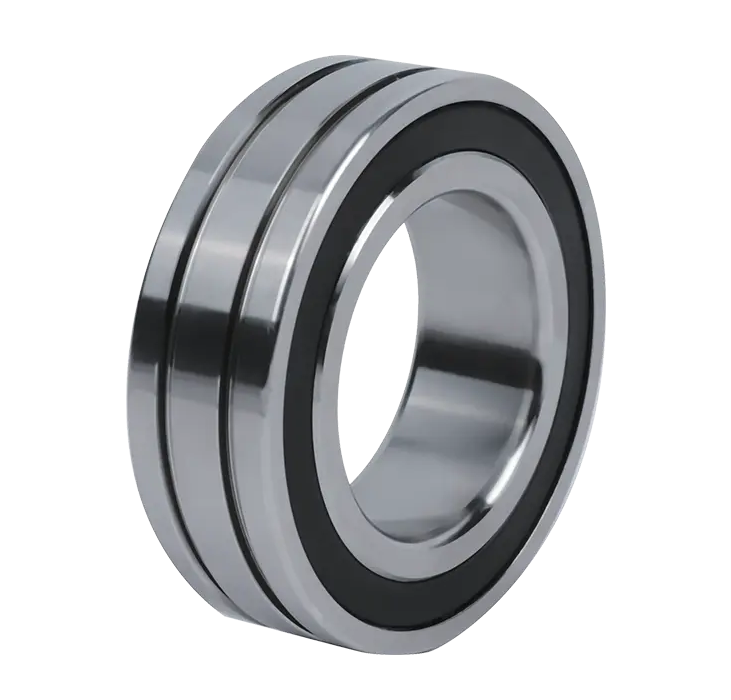
Bearings, lock rings, guide surfaces, and drive components matter as much as the large assemblies. A worn guide or a tired bearing rarely announces itself with a single clear fault. It usually appears as a gradual loss of package quality, which is why routine inspection and correct replacement parts are more economical than reactive repair.
Selecting a take-up winder begins with the yarn and the package, not with a brochure headline. The useful questions are practical: What denier range will run most often? What package weight and tube type are required? Is transfer manual, semi-automatic, or fully automatic? How much floor space and operator attention are available? What upstream line speed must the winder support without becoming the bottleneck?
For older or lower-output lines, a low-speed automatic switching winder can be a sensible fit. It reduces manual handling and improves transfer consistency without forcing a complete line replacement. For mills moving toward higher output or finer package control, a superspeed platform may be more appropriate, provided the godets, cooling, finish system, and building services can support it.
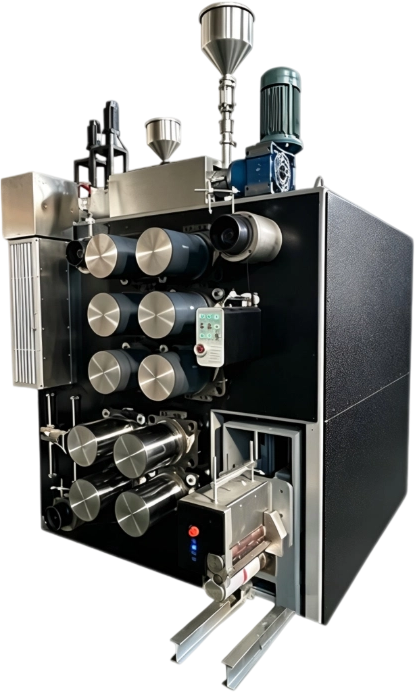
 SDJR-2401 Low-Speed Auto-Switch Take-Up WinderSuited to older or lower-output lines, this automatic-switching winder handles high-strength and specialty yarns; check package format, yarn type, and downstream handling before selection.View Product →
The SDJR2401 low-speed high-performance autoswitch winder is one option we support for mills that want automatic package switching in a practical production setting. The right choice still depends on the full line, so the winder specification should be checked against yarn type, package format, and downstream handling.
Winding problems rarely start large. A slightly misaligned guide, a contaminated contact roll, or a loose tension block can create enough variation to affect package quality before anyone notices a trend. Daily checks should focus on the yarn path, package build, and unusual sound or vibration. Weekly checks can go deeper into chuck runout, guide wear, air pressure, and transfer repeatability.
Cleaning matters, but indiscriminate cleaning can also cause problems. Solvents and tools should be appropriate for the component. Guide surfaces should be handled as precision parts, not scrubbed. Bearings should be replaced when specified, not simply cleaned and returned to service without checking fit and alignment.
When contact rolls or bailer rolls begin to mark packages or lose consistent pressure, planned maintenance of contact and bailer rolls is usually better than waiting for a quality complaint. The same principle applies to shift forks, gearboxes, and chuck assemblies: early inspection protects the package and the schedule.
This is rarely a simple financial question. A winder with sound mechanics but outdated controls may benefit from a focused retrofit. A machine with worn drives, damaged guide surfaces, and repeated transfer faults may be better replaced. The deciding factors are package quality, spare-part availability, operator safety, maintenance burden, and the cost of unscheduled stops.
Retrofits can be very effective when the basic mechanical platform is still stable. Control upgrades, chuck motor and fan changes, and guide roller control improvements can extend the useful life of a line while bringing operation closer to current expectations. Our winder upgrading service is built around this kind of targeted improvement rather than a blanket replacement recommendation.
Where the mechanical platform itself has reached its limit, a new winder platform can reduce vibration, improve package consistency, and simplify maintenance. For high-output applications, the superspeed winder is the natural comparison point.
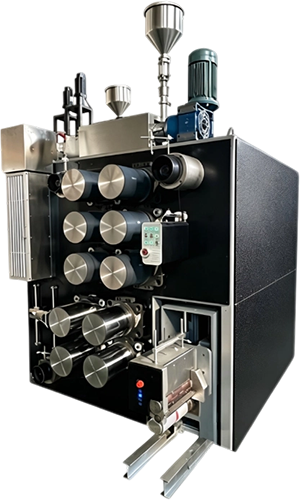
 High-Speed Take-Up Winder for Polyester and Nylon FilamentA new winder platform for high-output polyester and nylon filament lines, with electronic tension compensation and automatic doffing; compare against package quality and maintenance needs.View Product →
The decision should be supported by winding trials or at least a clear review of package defects, transfer performance, and maintenance history. A winder that is unreliable at the end of the line can make an otherwise capable spinning line look poor.
A take-up winder is a precision production tool, but it is also a practical one. It rewards stable tension, clean yarn paths, correct parts, and realistic operating conditions. Whether the task is improving an existing line, choosing a new winder, or deciding between repair and replacement, the best answer comes from looking at the whole winding system rather than one isolated component. That is the approach we take with every winding project that comes through our workshop.

العنوان: : رقم 1298، طريق تشوان، منطقة التنمية الاقتصادية والتكنولوجية، مدينة جياشينغ، مقاطعة تشجيانغ
الهاتف: +86 19057031687
التلفون: 86-0573-83777752
البريد الإلكتروني: [email protected]
Jiaxing Shengbang Mechanical Equipment Co., Ltd. جميع الحقوق محفوظة. مصنعي المكونات الرئيسية لآلات الغزل